Showing posts with label grad school. Show all posts

Tuesday, July 28, 2015

Meridith and the Terrible, Horrible, No Good, Very Bad Qualifying Exam

I’ve made my way all the way to the end of my 20th year of schooling without much in the way of seemingly insurmountable challenges. Sure, the post secondary life is peppered with exams (SAT, ACT, GRE), finals, applications processes, and so on, but while all of these have caused me stress in the past, none even compare to my qualifying exams of my PhD program. This past May, after a year of courses and months of studying, I tackled three days of intense examinations which included a day of two 3-hour Stats Theory exams and nearly 48 hours of a take home applied project. I went in with months of studying, waves of support from friends and family (thanks!) , 6 pages front and back of notes to use, and even a belly full of sushi. I come out… completely and utterly defeated.


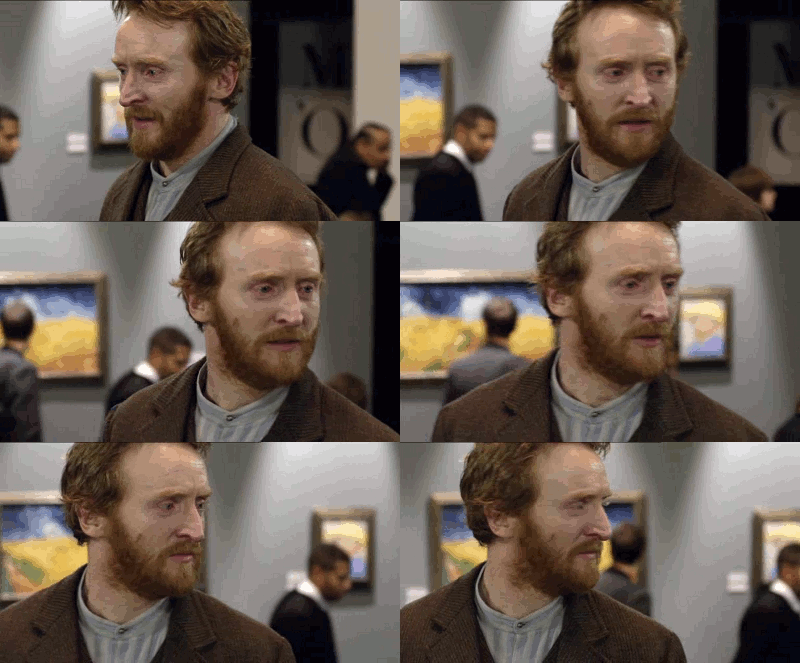
Failed like I failed to keep it together during
this episode of Dr. Who.
Going back a bit, studying leading up to these exams had pretty much become my life on top of coursework for my spring classes. The Fear and Guilt set in early and persisted throughout that time. If I was studying I was afraid of not being able to get enough exam practice and progress made in time. If I wasn’t studying, I felt guilty for spending any of the available time I had on anything else. Maintaining your mental health is important during this time, but it becomes increasingly difficult when anytime you make an effort to carve out time for yourself or your relationships that Guilt is always looming. When that first day finally arrived and we had our two theory exams, I tried to pump myself up and really believe in my abilities. I’d always pulled it together before! My brain was just. not. having it. Some of the questions threw me through a loop, some were from topics from other classes that I had not reviewed, some were fairly straightforward but my scumbag brain decided to wait to remember everything relevant until right as I was turning in my exams.

Tuesday, April 14, 2015

Blog Slacker Gives Peak into Real Life

Meridith and I were commiserating yesterday that we had been STS Slackers.  But, y'all, real life (RL) got so real these past few weeks.  Meridith is studying for her qualifying exams, and my lab mate and I have been racing against phenology to get our projects in the field.  We study the same invasive plant and have actually been experimenting with an amazing work sharing system.  More on that later, probably.

Anyway, all that to say, getting two blog posts out a month is pretty much where we are at these days.  We, of course, have tons of awesome plans and big ideas, but all those take time.  Time's a bit of a commodity these days.  So, in lieu of completely disappearing from the internet, I give you a peak into my RL, as seen from my iPhone.


Here we have the Rachel in her natural habitat, obnoxiously posing with an obscene amount of pin flags.  This might have been the day when I started the "You Might be an Ecologist if..." meme on Tumblr.

Wednesday, March 18, 2015

Being an Involved Grad Student

A.K.A How to being involved AND score free meals

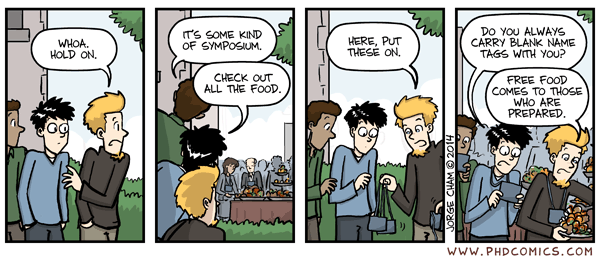
I'm a fairly involved graduate student. Rachel is as well. The benefits are numerous, but some of the top reasons we like to be involved include contributing to our respective departments and universities, building our C.V., access to amazing workshops/events/etc, in addition to always knowing where the free food on campus is located! Below are some of our top ways for you to get involved within your own programs!


Thursday, March 5, 2015

Questions to Ask when Choosing a Graduate Adviser

A few weeks back, my graduate group had its prospective student weekend, where all the top ranked applicants get to come and meet professors and current students.  Meeting and greeting all these hopeful students got me and a few others thinking about the process of choosing a graduate adviser.  STS wrote a bit about how to find and contact prospective PIs in the past, but that post doesn’t touch on how to make a decision once you have a few professors interested in working with you.  In many academic fields, your relationship with your major professor is the most important professional relationship you will have for many, many years.  Even when you earn your degree, a prospective employer will still want to know what your mentor thought of you.  So, it’s crucial to choose a person who you feel will not only aid your academic growth, but who you are generally compatible with on a personal level.  You don’t need to be BFFs, but things like having drastically mismatched communication styles, academic expectations, or assumptions about levels of involvement can make the road to degree completion much more hazardous.  And, on a broader scale, it’s really not worth it to work with Bigshot-Publishes-Yearly-In-Nature if they are unkind, unhelpful, or unavailable.


Below, I’ve compiled a list of pretty well every question I have ever asked, been asked, or wished I’d asked during the process of choosing a graduate mentor.  I’ve divided it into three main groups:  questions to ask the professor, questions to ask graduate students in their lab, and questions to ask any graduate student in the program.  You certainly don’t have to ask all these things, but do a little soul searching beforehand and think about what really matters to you.  You are making a commitment to work with someone regularly for the next several years.  Sure, they are interviewing you, but you are also interviewing them.    


Despite the fact that this list is long, it’s obviously not exhaustive.  Give more suggestions in the comments below!        

Friday, February 6, 2015

Part 3 - And Now for Something Completely Different


How We Came to be Here - A Story in Three Parts

This week STS will be sharing stories of coming to careers in STEM fields.  We hope we can offer three different perspectives on finding your career path, navigating higher education, and deciding how and when your journey needs to change.  We’d love to hear any and all of your stories about finding your calling or your struggles/victories if you’re still trying to figure it out right now.  Please share!  It’s important for all of us (especially those in high school and undergrad) to know that there is no single, best way to approach this crazy adventure.  For Part 1, which is Rachel's story, click here. For Part 2, which is Chelsea’s story, click here.

Can I do it on my own? 
I have some impressive posts to follow! I am very lucky to have two wildly inspirational best friends that are both doing such amazing things with their lives. I suppose it’s time for my story. Unlike Rachel and Chelsea, after graduating from WKU in 2009 I took an academic year off to reconsider my options for moving forward. I’d had lots of wonderful experiences during my undergraduate years thanks to my mentor, Dr. Albert Meier. At that point I had done research, internships, studying abroad, an honors thesis, but even with all of this involvement, I still was terribly intimidated by the prospect of graduate school. Albert often reassured me that I could go straight into a PhD program, but to me that seemed like rushing the process. During the time I was working on applications to different programs I was living at home and working at a Red Robin to save money. A lot of my friends had already been accepted and moved onto graduate programs while I still had a giant pile of uncertainty in my future. This was a pretty bleak time for me.

Wednesday, February 4, 2015

Part 2: Money isn’t Everything - or - Breaking up with Science

How We Came to be Here - A Story in Three Parts

This week STS will be sharing stories of coming to careers in STEM fields.  We hope we can offer three different perspectives on finding your career path, navigating higher education, and deciding how and when your journey needs to change.  We’d love to hear any and all of your stories about finding your calling or your struggles/victories if you’re still trying to figure it out right now.  Please share!  It’s important for all of us (especially those in high school and undergrad) to know that there is no single, best way to approach this crazy adventure. For Part 1, which is Rachel's story, click here.  
________________________

My name is Chelsea. I have known Meridith since I moved to Kentucky in 1996. That was 19 year ago! Before anything else, I would like to use this guest post as a forum to show some funny pictures of us together, and then I will talk about science.
IMG_1100.JPG
Photographic evidence of Meridith and Chelsea’s especially long friendship. This was taken at Meridith’s house in 1997.
Part 2: Money isn’t Everything - or - Breaking up with Science

Monday, February 2, 2015

Part 1: A Totally Expected Journey

How We Came to be Here - A Story in Three Parts

This week, myself, Meridith, and a guest author, will be sharing our stories of coming to careers in STEM fields.  We hope we can offer three different perspectives on finding your career path, navigating higher education, and deciding how and when your journey needs to change.  We’d love to hear any and all of your stories about finding your calling or your struggles/victories if you’re still trying to figure it out right now.  Please share!  It’s important for all of us (especially those in high school and undergrad) to know that there is no single, best way to approach this crazy adventure.      

“It is not the only or the easiest way to come to the truth. It is one way.” - Wendell Berry


Part 1:  A Totally Expected Journey


When applying for my PhD program, my soon-to-be mentor offered up some solid advice about writing and entrance essay to an ecology graduate program, “For the love of God, don’t tell us how you were a little kid with a bucket on the beach.”  Good advice for standing out in the pile of 100 essays written by little kids playing in the sand who grew up to become would-be scientists playing the sand.  I am, now, going to completely disregard that advice.  Here, making our point this week, I think it’s important.

Tuesday, January 20, 2015

Hindsight and Foresight

My Cohort Chums getting their learn on.
I finished my first semester of my PhD program last month after a long, very long, oh-so-long semester. For context, my previous educational career was in the biological sciences, but when applying to grad school (round two) I made the decision to pursue a degree in Statistics. This semester has held a lot of firsts, frustrations, and failures, but now that the dust has settled, I can look back on it with a clear view (hindsight is 20/20!). I want to take this time to reflect so that I can hopefully emerge with a more confident approach to my future semesters.

Thursday, January 1, 2015

2014 Reflections, Resolutions, and Round-Up

Hello, 2015! Rachel and I are living it up with our lovely friends in Boston. This year has been wonderful thus far, but we wanted to take a few moments and reflect on the great things that 2014 brought to us.  One of the most rewarding things for us, in the last year, was starting this blog.  From the launch of our Tumblr blog in January of 2014 to occupying this space in May, we feel so blessed to have this space to share our experiences as travelers, learners, and burgeoning female scientists!

Starting the new year sharing the same physical space is always a blessing for us as a creative duo.  We've been discussing our ideas/hopes/dreams for the future of Sweet Tea, Science, and you can rest assured that we are cooking up some exciting content for 2015!

Tuesday, December 2, 2014

Assess the Stress

This is it guys. Two more weeks and then FINALS! Wow, two sentences into a blog post and I’m already about to reach for the stress chocolate I have stashed in my desk right next to the stress tea. Admittedly, the rest of the semester is going to be non-stop GO, GO, GO, for me and a lot of y’all out there. We’ve all being kicking ass this year and nothing is stopping us now. Even that crippling fear of ending the semester in a horrific crash and burn finals extravaganza doesn’t stand a chance. Not going to happen, folks. Why? Because we are going to keep our stress in check. Rachel and I have both been through our fair share of finals weeks (not to mention Rachel’s COMPS are tomorrow! GO WISH HER LUCK) and we’ve gathered up our top tips for finishing the semester with minimal freak out moments.


  1. Hang on to your favorite mantras for dear life until it’s all over. My personal favorite currently is “Stay ahead of them game, or at least don’t fall behind”, while I’m pretty sure Rachel’s is “All my tasks are accomplishable”.  I used to think mantras were a little silly, but I am a full fledged believer now. Sometimes just taking a moment to remind yourself that you are capable really helps.


Wednesday, November 19, 2014

Plans for the Afterward

I'm studying for my qualifying exams right now, and I think I'm firmly in the "What if I FAIL?" phase.  I really don't think I'll fail.  But, WHAT IF?!!  In either case, I'll know in about two weeks.  In the afterglow of my success or in the I-don't-give-a-crap phase before deciding on my new career path, I plan to have two days of full on relaxation.  Hint, if you come to this blog to hear about actual science things, then now is the time to bow out of this post.  Otherwise, here are the things I plan to do when I can close my eyes and not visualize the carbon and nitrogen cycles.

Tuesday, October 28, 2014

Tricks of the Trade: LaTeX

Ok, guys. I’ve been studying as a baby statistician (scienctician? statscientist? ecologitician?)  for a little while now and I’m here to share some of their secrets. Before I started here at Penn State I had a couple ideas about what other grad students in my department would be like. First, everyone would be computer masters of any and all statistical programs: R, SAS, others that I hadn’t even heard of yet. Second, they’d all be completely on top of everything in all of our classes because they all would’ve completed undergraduate and master’s programs also in statistics. And thirdly, it’d be really hard to relate to other students because of my background in biology and my love for the outdoors (because clearly they’d all prefer sitting inside in front of their computers, right?). Thankfully, I was way off base and not only am I not left in the educational dust, but my cohort is full of awesome students with a wide variety of strengths and abilities. And I must collect them all. Yea, my new goal is to be like some sort of awesome Anna-Paquin-as-Rogue statistician and glean all of the amazing abilities and knowledge while I can. Except I think I’ll stick to taking the time to learn and practice things...instead of the whole touchy hurty thing she does. One of my absolute favorite new acquires is the ability to write and code in LaTeX.

Tuesday, October 21, 2014

Getting a Motivation Makeover

Last week, doing anything was a struggle.  Literally all I wanted to do was watch cartoons, eat burritos, and perform the bare minimum tasks I could get away with doing (Editor’s note: This is me. Always).  Admitting these sorts of things is what makes the idea of an anonymous blog very appealing on occasion.  It’s not because I have a super exciting secret life or anything (spoiler alert: I find my own life very exciting on the whole), but because I think a lot of the things I struggle with as a scientist in training are widely felt but often actively overlooked.  Graduate school is where you learn how to learn (because as a scientist, the learning never stops), hone key skills, and net a set of accomplishments that will make you stand out in the job market.  It’s a place where people who are fired up about things go to dive deep into problems, and it’s no surprise that so many great innovations are the result of doctoral dissertations.  And I’d say, about 50 weeks out of the year, I feel fired up about science.  About conservation.  About freaking adorable invertebrates and gnarly invasive plants.  


Adorbs.
I’ve been in graduate school for over 5 years, 3 years for my Master’s and 2 full years of PhD work.  It would be disingenuous and unhelpful for me to say that, over the past 5 years, I haven’t had motivational slumps.  Do I believe there are people who are 100% juiced up all the time, who never have to search for a reason to get reignited over their work?  I really do.  And I wish I was one of them, but I’m not.  Further, I think there are plenty of graduate students who struggle from time to time with motivation.  There are a lot of reasons:  personal issues, burnout, loss of interest in a project, imposter syndrome.  The thing is, I think we are taught to pretend this isn’t happening.  I have stock advice I give to all new graduate students when we are chatting, “Anyone who pretends they have their act together is faking it.  Everyone is freaking out.”  I think I need to do a bit of taking my own advice.  I’m probably not the only one who occasionally sits at their desk and goes “blah.”  I don’t think feeling a periodic lack of motivation makes me (or you) a bad scientist.  I don’t think it indicates a lack of passion.  I think pretending it isn’t happening is less than authentic.  I think refusing to yield to these periods and rekindling your fire speaks volumes of capability, passion, and drive.      


So here is my truth, as I’ve experienced it on several occasions.  I’m sailing along fine, killing it in the lab, balancing several projects, keeping my little fingers tippy-tapping on my writing projects.  A large milestone approaches.  I start to feel like I’m not doing enough (ironically, these sorts of thought progressions usually happen after 8pm in the lab…) and a little touch of imposter syndrome starts to kick up.  How rude!  I make plans for how to attack said milestone, I budget out my time, I feel like I can totally do this!  Then I’m motionless for a stressful span of days, absolutely sure that as soon as I begin I’ll realize the task is impossible.  Things spiral, I consume an unnatural amount of peanut butter, then some action or event clicks things back into place and I’m sprinting again.  In the spirit of honestly, it’s absolutely frustrating to look at yourself in the mirror and say aloud, “What’s wrong with me this week?”  But, in the end, it’s almost like fighting with your best friend.  It’s going to happen at some point, and if you take the time to learn something about them and yourself in the process, you can come out the other side closer than ever.


After that overly honest preamble, I’ll present my non-exhaustive, in no particular order list of things that have gotten my butt back in gear in the past.  This is how I kiss and make-up with science when I’ve been neglecting it.   
Tuesday, October 14, 2014

STS and the Super Science Side of Tumblr TA Tips for Teaching

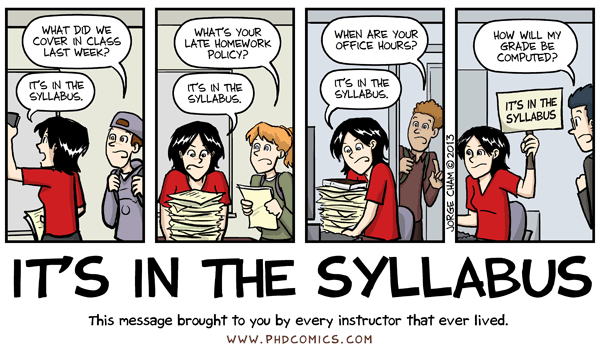
We here at STS have TAed a lot.  We both taught lab sections when we were juniors and seniors in undergrad and then we taught more sections during our master's work.  I also taught during my first year in PhD land.  As a graduate student, TAing is often non-optional (gotta' pay those bills), exciting (young minds!  oh golly!), frustrating (it's ON THE SYLLABUS!), and intimidating (wait, so I have to be in charge of 20+ other legal adults for an hour or more?).  So, what are some of the most efficient ways to increase the fun and excitement of teaching, while minimizing the stresses?  Back at the beginning of the term, Meridith was going through orientation for her new grad school adventure and part of that orientation involved TA training.  She posted on our STS Tumblr, and asked the Science Side for their TAing tips and tricks.  The response was great!  So great, we decided we needed to bring all the responses together and archive them here on our blog.  
If you're a new graduate student, we hope this helps you put some tools in your forming TA tool belt.  Remember, people have personal teaching approaches, so everything doesn't work for everyone!  If you're an undergraduate or high school student, maybe this will give you some insight into what your instructors are thinking.  I promise, we are all actually working really hard to try and make this a good experience for all of us.  If you're a senior graduate student, maybe you have some tips and tricks of your own that aren't included in this post.  Share them with us in the comments!     
Head over to http://phdcomics.com/comics.php for more amazing funnies like this one!

Tuesday, October 7, 2014

Is there a Doctor in the House?

I’m over a month into my PhD program and I’m still oscillating between wild, ecstatic optimism and stone cold, stop you in your tracks fear of the route ahead.  Completing a Master’s degree was two and a half years of hard work and setbacks culminating in one of the proudest, happiest moments of my life - successful defending of my thesis. I’m back on track for five more years of the grad student life, but these will be harder, faster, stronger times ahead than before. Good thing I’ve got my Daft Punk pandora station ready to go. My Masters program didn’t entail any qualifying or comprehensive exams so they seem like lofty, impassable goals now. A sentiment shared by my cohort members, but we’ve found that the more information we have the more confidence we gain. We here at STS would like to share what we know about our own roads to knowledge with you the readers so that you guys can find the confidence to face this journey too.

Tuesday, September 16, 2014

A Day in the Life: Summer Field Work

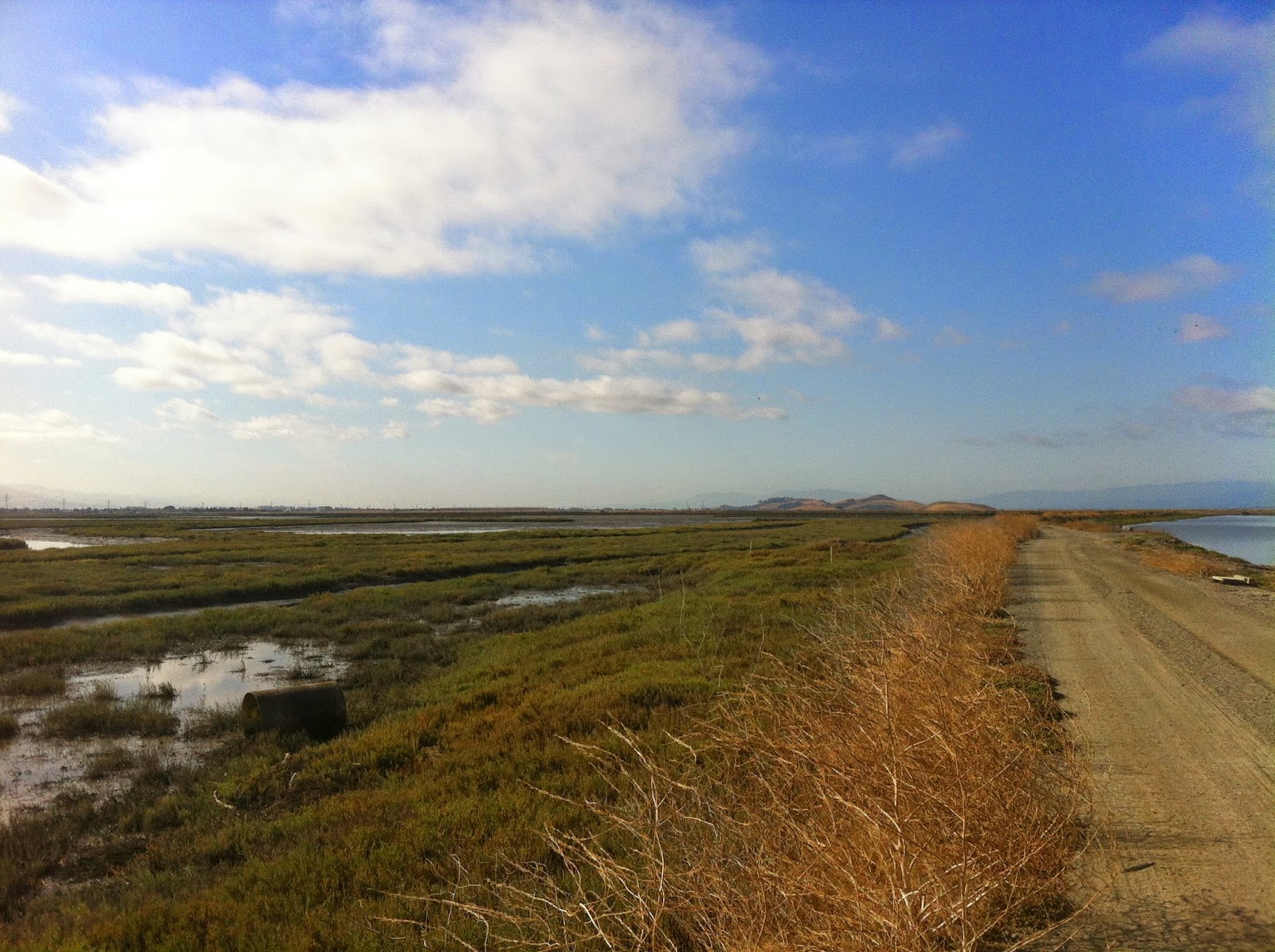
Restored marsh area.

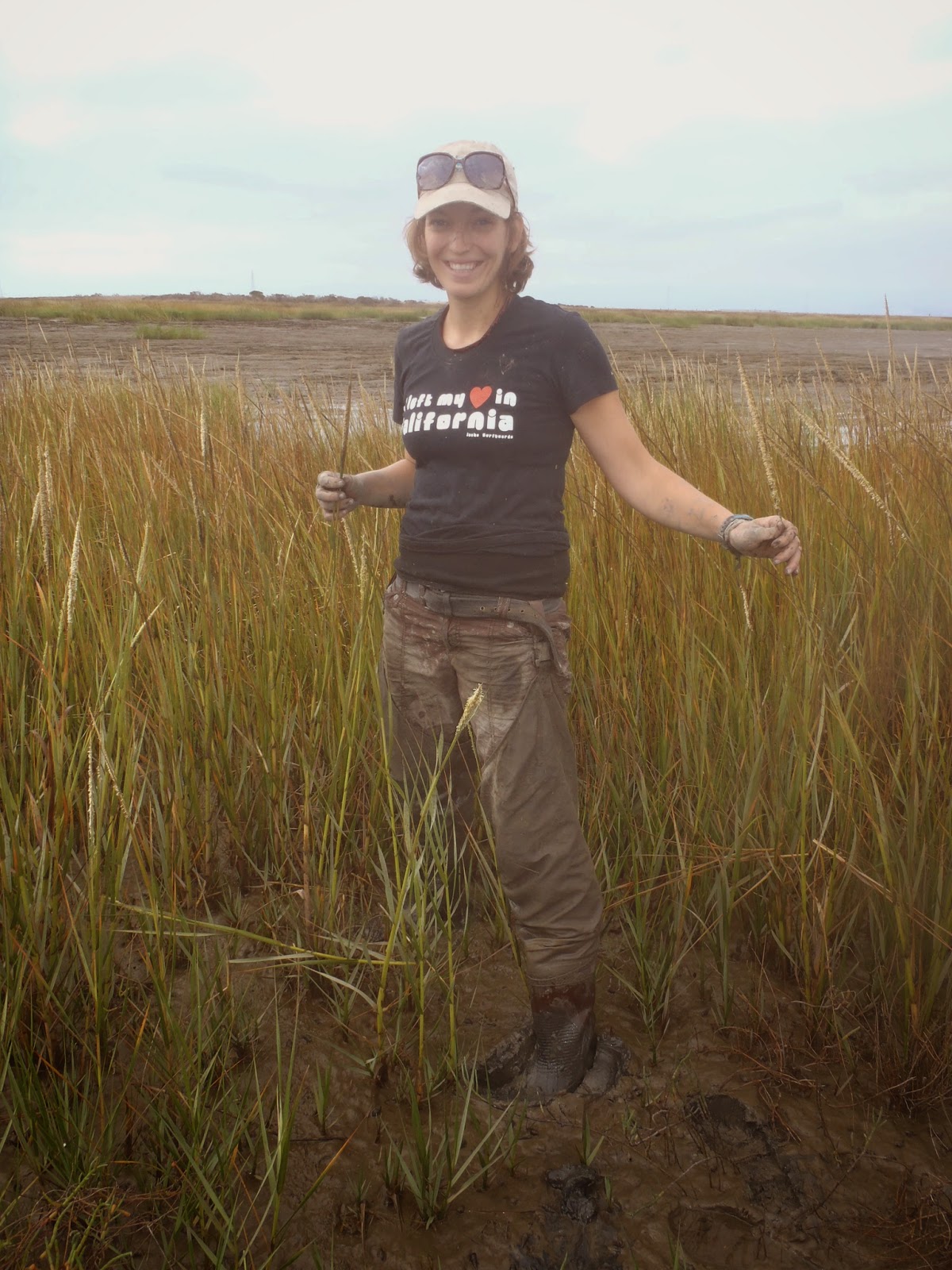
Despite what Starbucks is trying to tell you, fall doesn’t officially start in the Northern Hemisphere until September 22nd at 10:29 pm (equinox party anyone?).  And yet I felt now might be a great time to reflect on the summer.  At this point, if you’re a semi-regular reader you probably know a bit about my interests, but today I want to share a peek inside my summer work.  It was fun, it was muddy, and it was also just a ton of work!

I'm just for scale, look at the height on that hybrid Spartina!

But before I can really tell you what I did, I need to tell you why I did it.  As a PhD student, I’m nurturing a little research agenda that I hope will mature over time.  Right now, it’s at that horrible tween stage where it wants to be a grown up research agenda, but I keep driving it to the mall and embarrassing it in front of its friends.  Regardless, when people ask about my work at parties or family functions, I tell them I study the impacts of invasive plants in tidal wetlands.  Tidal wetlands are hugely important in terms of impacts to biodiversity (nursery habitat for many organisms) and ecosystem services (carbon storage, flood abatement, water filtration, and the list goes on…).  Ironically, in California, only about 10% of our historic tidal wetland area remains, and to add insult to injury wetlands are one of the ecosystem most impacted by invasion.  

But, why invasive plants?  Plants are primary producers, hanging out at the base of the food web, and when they change, other things change in really interesting ways.  My master’s research focused on the impacts of an invasive plant on songbird food webs.  I found the plant impacted the insects, which the birds ate, thus impacting the birds.  I was intrigued!  That’s how I knew a PhD was right for me, after my MS, I have about 1,000 more questions.  In my current research, I try to understand:  How do changes in invasive plant density impact the effects these plants have on ecosystems?  How does restoration approach impact ecosystem recovery after the removal of an invasive plant?  How does understanding the function of invaders in ecosystems impact management choices?  I have approximately a billion other small questions that I try to address, but those are the biggies.


Tuesday, September 2, 2014

Winning Your First Professional Conference

If you're in Portland for a conference, you should
probably go hike at Mt. St. Helen's
Hello September!  Can you believe it?  I know I can’t.  Classes are ringing back into session all over the country, and most people are gearing back up after the summer.  For me, September is going to be a month of getting things back in order after a really intense stretch in July and August.  I wouldn’t say I’m gearing down, but without vacation, 8+ hours of manual labor, or time sensitive lab samples to deal with, I’m hoping I can refocus and reorganize.  One project I’m giving special attention this month is updating the analysis of chapter two of my Master’s Thesis, which I will be presenting at a conference in October (and submitting for publication before the end of 2014...I think I can...I think I can…). (Editor’s note: I know she can!) Professional conferences are very helpful as benchmarks for your research.  They give you something to work toward in the short term, and they also provide a great forum for research in progress (either in progress of collecting data or analysing it).  Aside from this, professional conferences are great opportunities for loads of other reasons, which are completely applicable for those who don’t have research to present yet.  If you are gearing up for your first conference this fall, or if you are on the fence about the usefulness of attending, here are my thoughts on how to get the most out of your first academic conference.    

Tuesday, August 26, 2014

Fiscal Responsibility feat. Sweet Graphs

Back in April, I took a big step towards being a Real Adult and started my own budget spreadsheet. After just the first month, I was completely shocked at how much I was actually spending (read: THAT much on dining out?!) Now that I’m heading back into the tight grip of grad schooldom, I know that I need to prepare myself for the grad school lifestyle. Which, of course, means living within my means. My first step in this preparation process was to create a budget spreadsheet for myself. I’m a big believer in ‘knowledge is power,’ and had to embrace that mantra to keep my head up while working on this project.

I started in Excel with two of the provided templates: College Cash Flow and Monthly Home Budget. Both templates provides you with a file already outfitted with calculations to auto-fill the green boxes based on data in the yellow boxes. In the College Cash Flow file, you input your starting money on hand and monthly expenses by convenient categories likely to be used by college students (e.g. books, tuition, etc). Your total income, expenditures, cash flow, and ending balance are automatically calculated for each month. The Monthly Home Budget sheet performs a similar task, but on a shorter time scale. You also have an opportunity to compare your actual income/expenses to budgeted ones. Together they are both useful, but I found that with a little extra work I could create a more interconnected, useful budgeting tool, complete with visuals.

I wanted to know more about my individual purchases in addition to total monthly charges, so I added a section to the Monthly Home Budget sheet at the bottom where I could input each individual purchase with Date, Cost, Type, and Notes. I found that having to record each transaction separately also helped me stay aware of my spending as the month progressed. I have Office 2008 for Mac on my computer, so everything I mention subsequently will be specific to that version of Excel.The major amendments to the spreadsheet templates are as follows:

Tuesday, August 5, 2014

Cover Letters of Interest

Once you've gone through the process of finding potential grad school advisers, the next step is to contact them. It can be quite scary. That fear that you'll craft a seemingly marvelous letter, attach your well-written CV, send it off, and then…hear back nothing. Or worse, you'll hear back, but they aren't interested in your obvious brilliance. Try not to get in your own head too much. Think of it more as the start of an epic journey towards the next step in your blossoming academic career. The professors that show the most interest in you are going to be the ones that are the best fit for your unique interests and skills. Writing about yourself is hard, but now is the time to brag on yourself a bit. Say it with me, “I am a badass science baller and all the profs want me.” Keep in mind that this letter does not need to be perfect. I just looked back at the cover letter I sent to my MS advisor (keep anything you write about yourself!) and it’s nearly 2 full pages long with way too much information. Thankfully, she wasn't bored, and I had a wonderful, productive Master’s experience.
Say it again!

Tuesday, July 22, 2014

What's in Her (Field) Bag

Summer is a funny time for an ecologist.  As a student, my classes have all wrapped up (I’m actually all done with class now, forever!!).  My social media is full of people’s summertime adventures.  My partner, who teaches communications courses at community college, is in full on vay-cay mode.  Me?  This is my busy season.  I have been up to my eyeballs in marsh mud for most of the month, and for the month before that I was prepping.  
China Camp State Park.  Maybe my favorite site. 
Ah, the field season.  The first day of the each sampling period, I’m always a huge stress ball.  By the time I visit my last site, I feel like Queen of the Marsh.  One thing I always do to minimize my first day jitters is prepare a packing list for each project I’m working on.  This helps minimize those “Oh crap, I left that sitting on the lab bench” moments.  This packing list is mostly full of project specific items (thermometer, pH probe, redox meter, etc.).  In addition, I have a mental checklist of things I never like to don my waders without.  These items reside in my trusty field bag, and today I’m giving you the grand tour!


I know we have an eclectic readership, from PhDs, fellow students, teachers, and amazing high school science enthusiasts.  Though you might not all be headed out to do field work anytime soon, I hope a look at my “must have” items gives you a taste for what a day in the life of a field scientist can be like.  Think of this as the field biologist’s version of those posts by lifestyle/mom bloggers about what they keep in their purses/diaper bags.*


Trusty field bag!

Related Posts Plugin for WordPress, Blogger...